Introduction to 'Refrain of Memory'

If this is your first visit here, please give the introduction post a look: Introduction.


Sunday, June 7, 2009

Minami-ke


Minami-ke (13 episodes, 2007)
Minami-ke: Okawari (13 episodes, 2008)
Minami-ke: Okaeri (13 episodes, 2009)
Minami-ke OAD (TBA, 2009)


Synopsis

"This is just a plain depiction of the days of the lives of the three Minami sisters. Please don't expect too much."

As Chiaki considerately narrates throughout the beginning of the series, Minami-ke is a pretty simple series. It follows the daily lives of the three Minami sisters: Haruka, Kana, and Chiaki. Haruka is the oldest of the three, so she takes on the role of the mother-like figure of the household, while attending high school. Kana is somewhat of an ill-mannered girl, frequently getting into arguments with her younger sister or otherwise causing trouble. Chiaki is the youngest of the sisters, but is generally more mature than Kana.

Characters (click names to view images)

The Minami Family
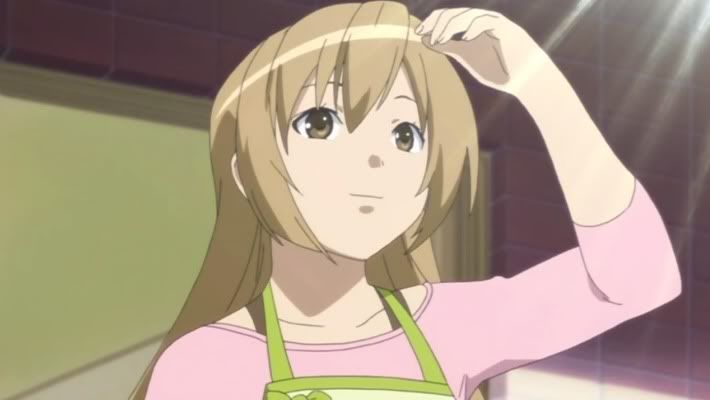
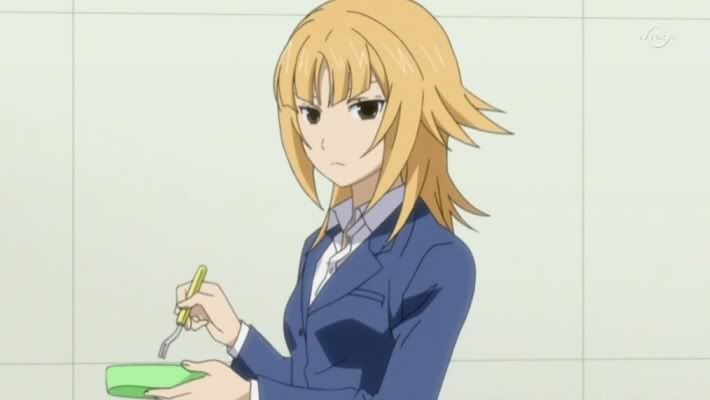
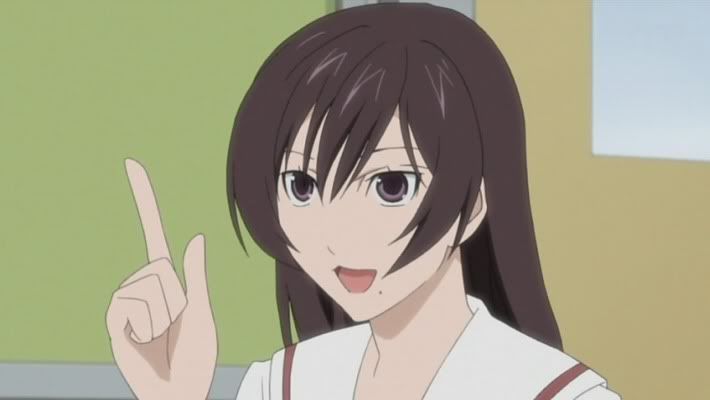
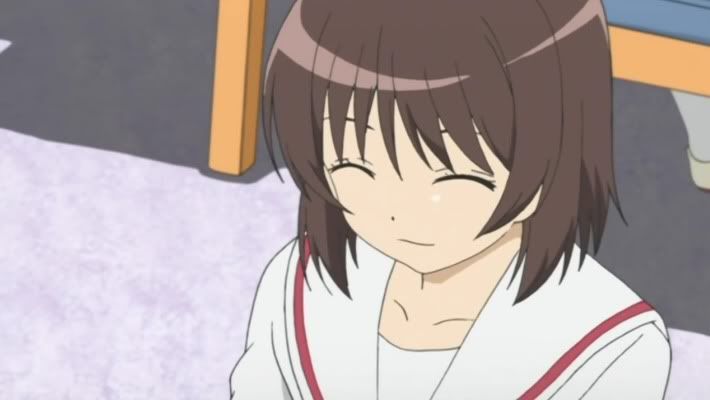
  • Haruka Minami: Haruka is the eldest of the Minami sisters, and as such, she takes on the role of the mother-like figure of the household. She takes care of the majority of the cooking and cleaning, also acting as the mediator who breaks up the frequent arguments between her two younger sisters. She is still attending high school, though she is given leniency in some areas, due to her obligation to take care of her sisters. (For example, she often gets to leave school early, so that she may take care of housework and prepare for her sisters' return from school.)

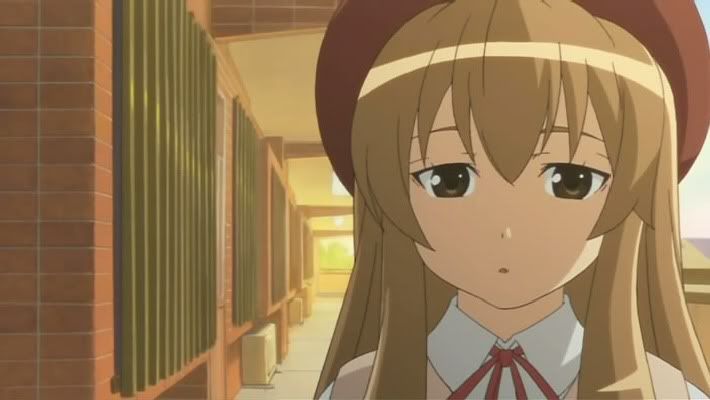
  • Kana Minami: Kana is somewhat ill-mannered. She tends to be selfish, and frequently gets into arguments with her younger sister. She's rather lazy, and spends much of her time at home lying down and/or eating. However, when she is in the mood to be so, she can also be very energetic. She is a terrible cook, so she relies on Haruka and Chiaki to do the cooking, but occasionally finds herself trying to cook something for herself, which generally ends in disaster.

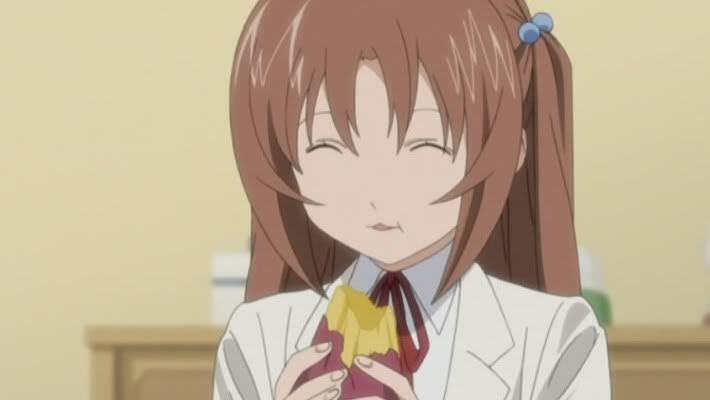
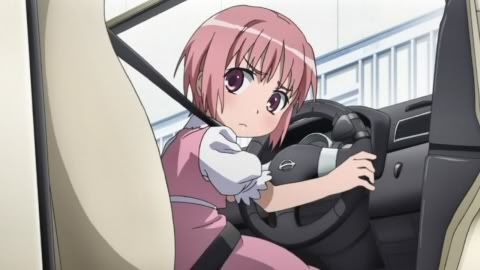
  • Chiaki Minami: Chiaki is the youngest of the Minami sisters, but in spite of that, she is more mature than Kana. She worships her oldest sister, Haruka, which may be the main reason for her maturity, as well as other similar attributes, such as cooking skill. However, Chiaki tends to act a bit cold toward others, especially Kana, with whom she is often quarreling with.

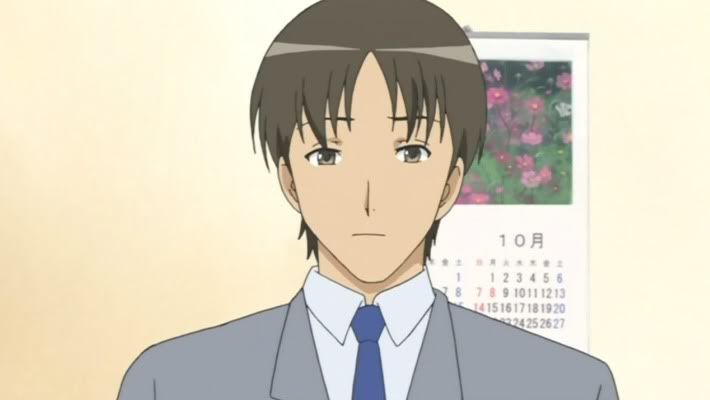
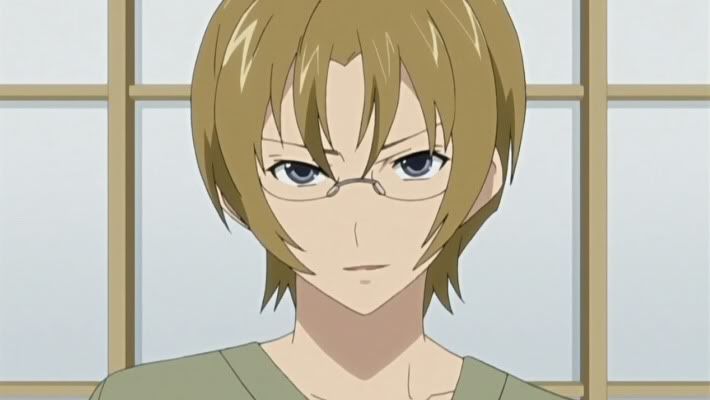
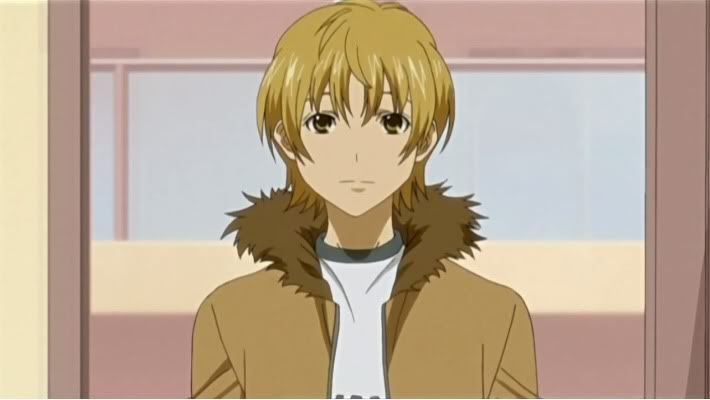
  • Takeru: Takeru is not directly related to the sisters, but is their cousin. He occasionally visits the sisters, either to check up on them, or to provide transportation for them.
The Other Minami Family (no relation to the sisters)
  • The Eldest Brother: The eldest brother of the other Minami family (actual name unknown) acts as the household's father-like figure.

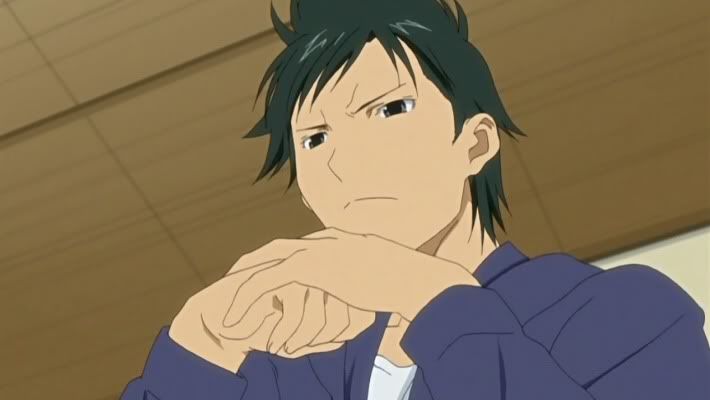
  • Natsuki Minami: Older than Akira and Tōma, but younger than their eldest brother, Natsuki is in his first year of high school. Natsuki was previously known as a delinquent around school, due to his violent behavior. After being recruited to the volleyball team by Hosaka, his behavior calmed down a bit, but he is still known for having a bad temper at times.

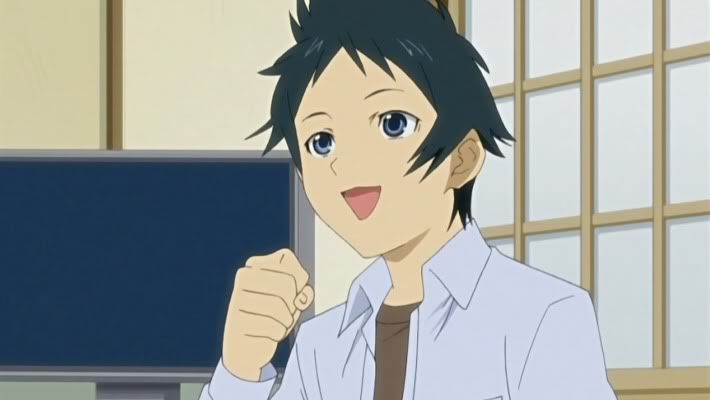
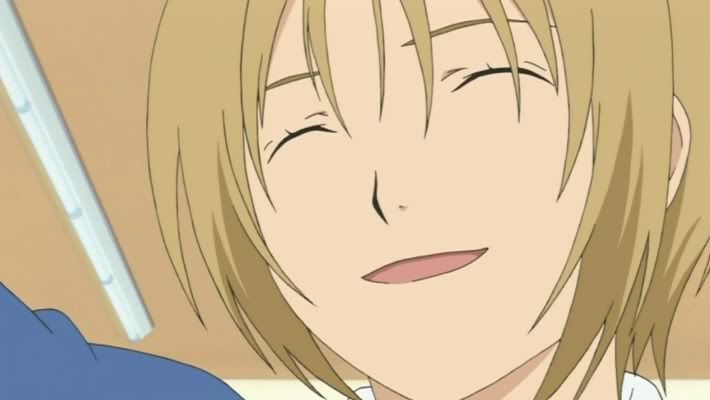
  • Akira Minami: Akira is in the same grade as Kana, but in a different class, so they rarely cross paths. He is the youngest of the brothers in his family, but older than his sister. Because of this, he is often treated like a child by his older brothers.

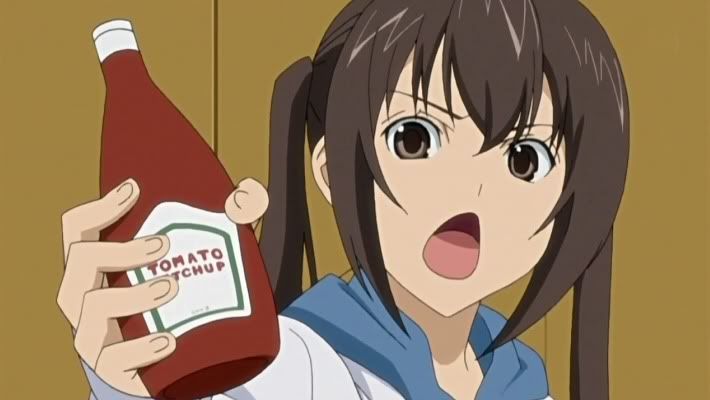
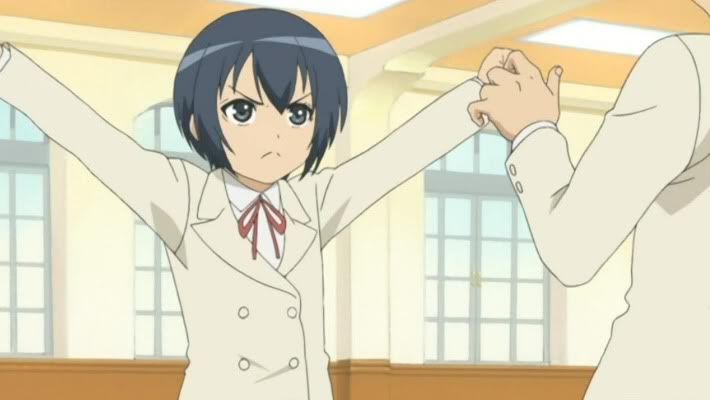
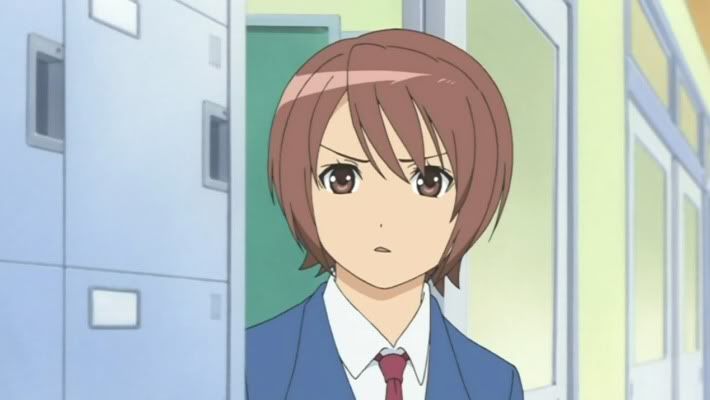
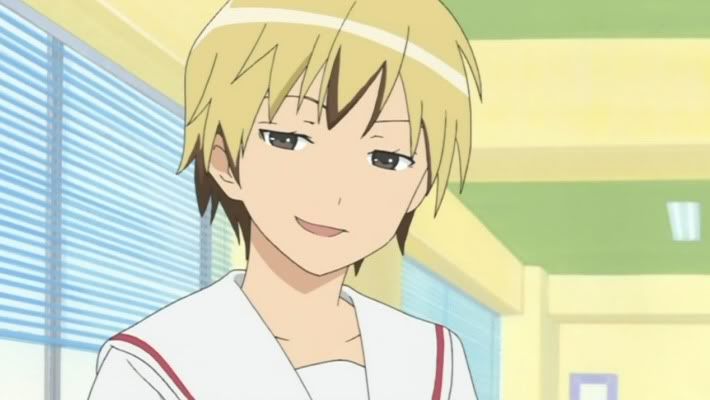
  • Tōma Minami: Tōma is a tomboy in Chiaki's grade (though in a different class). Because of her family name and boyish nature, Chiaki "adopts" her as a brother, which leads to her frequently visiting the Minami household, and often wearing boys' clothing. The fact that she lives in a household consisting only of three older brothers is likely the cause of her boyish attitude.
Other High School Students
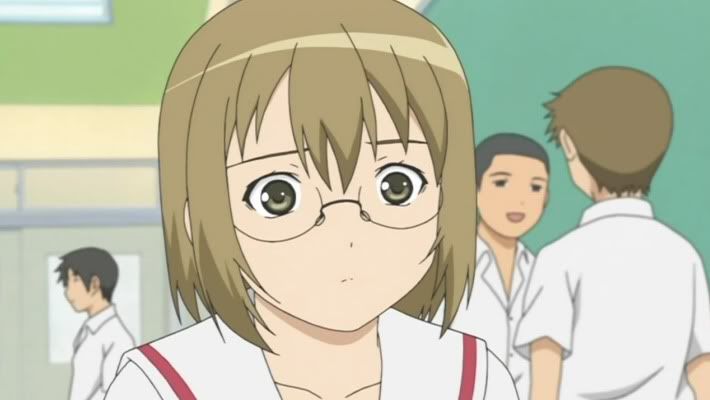
  • Maki: Maki is a classmate of Haruka. She is often trying to interfere with Hosaka's approaches to Haruka, because she finds him disgusting. Due to being a member of the volleyball club, however, she often has to deal with Hosaka even when she doesn't want to.

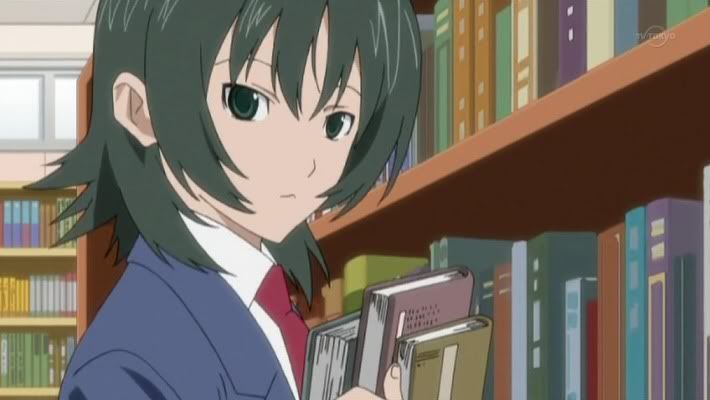
  • Atsuko: Another classmate of Haruka, as well as a fellow member of the volleyball club. Generally on the quiet side.

  • Hayami: An older member of the volleyball club. Contrary to Maki's attempts to keep Hosaka away from Haruka, Hayami often gets involved in Hosaka's attempts to impress Haruka, coming up with all sorts of schemes for Hosaka to make use of.

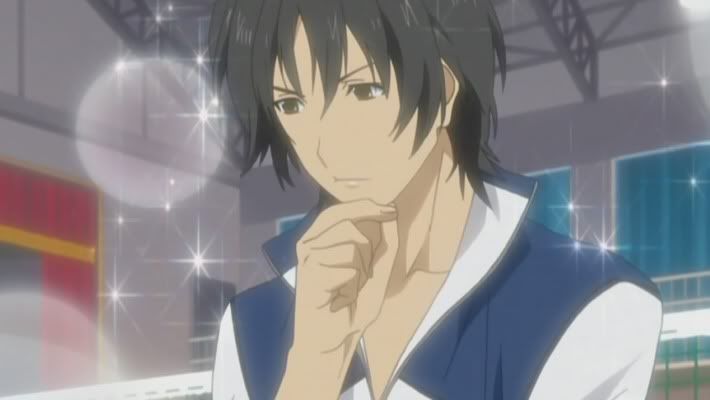
  • Hosaka: Hosaka usually puts on a cool act, but often gets lost in his own personal fantasies, causing him to act strangely in public, resulting in the repulsion of others. He is the captain of the volleyball club, and greatly admires Haruka, whom he wants to convince to join the volleyball club. Due to his initial urge to impress Haruka with homemade cooking, Hosaka has become a cooking expert.

  • Hitomi: Hitomi is a classmate of Natsuki, and has a crush on him. She claims she can read his mind/mood by looking into his eyes, and frequently acts to counter his negative moods with various acts of kindness.
Other Junior-High School Students
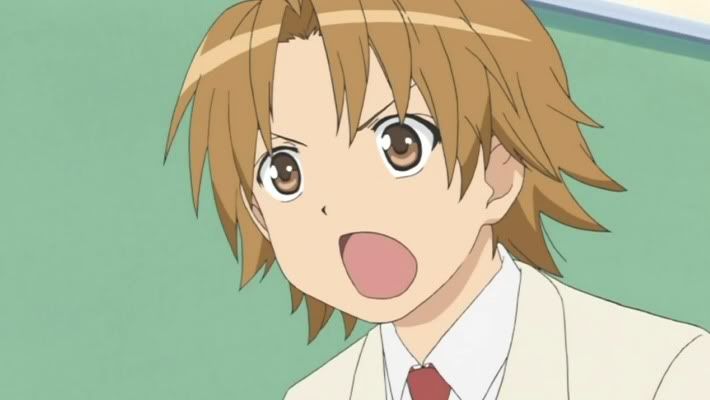
  • Fujioka: Fujioka is a popular classmate of Kana, who has a crush on her. Due to a misunderstanding, however, Kana views Fujioka as a delinquent, and avoids him, while continuing to misunderstand his feelings for her. Fujioka makes several attempts to get closer to Kana, which eventually result in him getting closer with her whole family. Because of this, he frequently visits Kana and her sisters, and joins them for various activities.

  • Keiko: Keiko is Kana's classmate, and an honor student. She frequently gets 100's on her quizzes, but Kana's backward logic twists this fact into a negative attribute for Keiko, which Kana often makes her feel bad about. Kana often drags her into various shenanigans.

  • Riko: Another classmate of Kana's. Riko has a crush on Fujioka, but notices the time he spends around Kana, which results in a sort of rivalry with Kana.

  • : Yū is a senior to Kana, and given the title of the third-generation "Banchō" (leader of juvenile delinquents) against her will.

  • Hiroko: Hiroko is Yū's classmate and best friend.
Other Elementary School Students
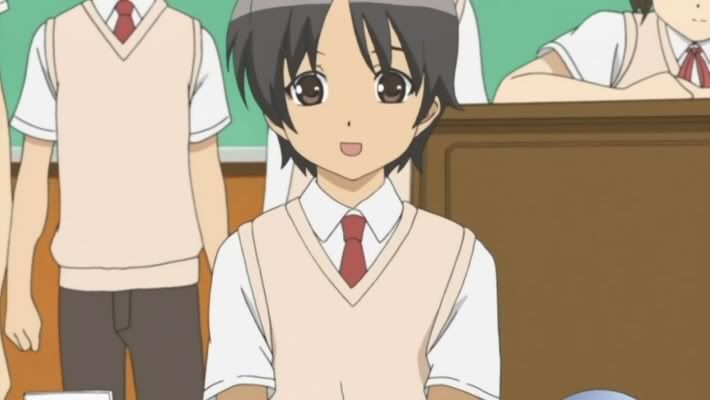
  • Makoto: Makoto is a male classmate of Chiaki, though he is not liked by her, often being bullied by her in school. When he manages to join Chiaki and her friends for a study group at the Minami household, Makoto meets Haruka and forms a crush on her. He helps Haruka make food for everyone, which causes Chiaki to dislike him even more, gaining a sense of jealousy toward him. Because of this, he finds himself required to take extreme measures to be around Haruka...

    Mako-chan: "Mako-chan" is an alternate, female persona which Makoto takes on in his desperate attempts to visit the Minami household to see Haruka. Originally a method forced upon him by Kana, as a joke, Makoto begins to voluntarily continue it, as it seems to be his only way to get closer to Haruka.

  • Yuka Uchida: Yuka is a friend of Chiaki, though she is in a different class. A bit of a ditz, she is forced to join "Team Idiot" with Makoto, and is also recruited by Kana to join her escapades.

  • Yoshino: Yoshino is a classmate of Chiaki, and generally seems to be the most levelheaded among the elementary students. She is not aware of Makoto's crossdressing secret, but gradually begins to question the similarities between Makoto and Mako-chan.

  • Shūichi: A very ordinary classmate of Chiaki, earning him the nickname of "Plain Yogurt."

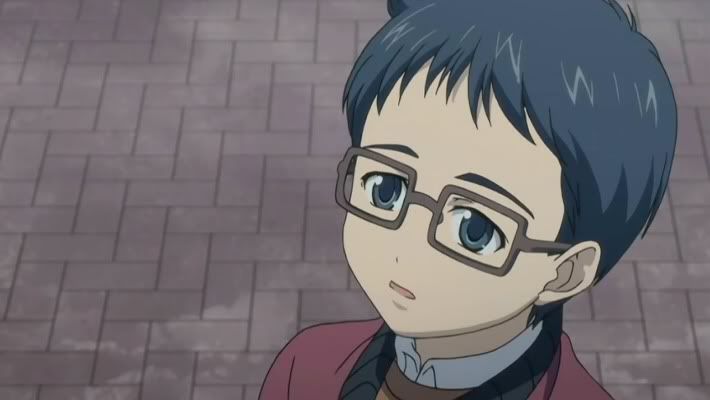
  • Fuyuki: Exclusive to the Okawari arc of the series, Fuyuki is a transfer student in the same grade as Chiaki, but in a different class. However, he lives next door to the Minami sisters, so he often crosses paths with them. He feels the need to accept every favor asked of him by others, which bothers him, but he does them regardless.

Other Notes
  • Artwork & Animation: For the most part, I think this series has a fairly unique art style to it -- specifically, the character design. I can't quite explain how I find it so, but if you just check out the images I provided for the characters, I imagine you should be able to see what I mean. On a related note, the animation for this series actually surprised me at times. Although it's not a consistent thing, several scenes scattered throughout have really great animation (framerate, consistency, etc.), which I find rather surprising for a slice of life series like this. Considering how laid back things are much of the time, Minami-ke occasionally catches you off guard with a very well animated action scene. The OP and ED animations also tend to show similar quality.

  • Soundtrack: I pretty much immediately became fond of the Minami-ke soundtrack, as soon as I first heard "Minami-ke no Asa" in the beginning of the series. (It's the first song used in the series.) Apparently, the soundtrack was never released as a single official compilation, but was spread across the series' OP and ED theme song singles, drama CD's, and some bonus discs included with DVD's.

  • References: There are a few references to other series, even including Western television. For example, there is a reference to 24 in the sixth episode of the first season (04:12).

  • Okawari Differences: To start with, both Okawari and Okaeri are produced by different studios than the original series: the original studio is Duomu, while the latter two seasons are done by Asread. You will quickly be able to realize this, upon starting Okawari, because the art style changes quite a bit (even going as far as changing characters' hair and/or eye colors). Along with the change in art style, the storytelling changes a bit as well. For one, the story isn't from the manga (so, basically, some would say it's "filler"). It's also different in the sense that the story is told in a less episodic manner than the original. Most of the first season's attributes return in Okaeri, though some character designs are carried over from Okawari.

  • OAD: An OAD (original animation DVD) for the series is set for release on June 23rd, but I haven't found any accurate info on it yet. Once I do, and/or I watch it, I'll update this.

Conclusion

Despite the slight deviations that the series takes after the initial season, it's still a great series, ultimately. If I were to list the seasons in order of preference, it'd be something like Minami-ke > Minami-ke: Okaeri > Minami-ke: Okawari. Overall, though, the series provides some great laid back entertainment, and plenty of laughs (especially when Hosaka is involved). If you're looking for something to kick back and casually enjoy, and/or you're looking for some innocent comedy, then this should be a great choice.

Monday, May 25, 2009

Black Lagoon


Black Lagoon (12 episodes, 2006)
Black Lagoon: The Second Barrage (12 episodes, 2006)
Black Lagoon: [Third Season] (TBA)


Synopsis

Black Lagoon doesn't really have a consistent story, as the storyline is made up of a handful of 2-to-3-episode arcs, most of which have no particular relation to the others. The reason for this being that the story revolves around a group known as the Lagoon Company. They call themselves a "trading company," but are basically mercenaries/pirates working for whoever's willing to pay. (They have a close relationship with the Russian crime syndicate known as Hotel Moscow, however, so the Lagoon Company is often hired by them.) The company is originally composed of three people, at the start of the series: a Chinese-American named Revy, the sharpshooter of the company, handling most gunfights; Dutch, the African-American leader of the group and captain of their ship, the Black Lagoon; and Benny, the American technical expert of the company. However, after the events of the first two episodes, they recruit a former hostage, a Japanese businessman named Rokurō Okajima. From that point, the series follows the company through various missions they take on.

Main Characters (click names for images)
  • Rock: Rokurō Okajima, a Japanese businessman who became a hostage of the Lagoon Company during one of their missions for Hotel Moscow. Abandoned by his job and society, he found himself joining the Lagoon Company after the incident, under the nickname of Rock.

  • Revy: A skilled shooter, Revy (full name: Rebecca) is an ill-tempered American of Chinese descent, and the Lagoon Company's primary gunman. Revy tends to be fairly calm, but that can change very quickly if she is provoked, usually resulting in her provoker being held at gunpoint.

  • Dutch: Dutch is the African-American leader of the Lagoon Company, and captain of their ship, the Black Lagoon. Thanks to his previous military service (Marines) in the Vietnam War, Dutch is a capable gunman, but doesn't usually get involved in fights unless he has to. Instead, he tends to stay behind lines and give orders as the leader of the group. Outside of battle, Dutch is usually a laid-back, nice guy, despite his intimidating muscular exterior.

  • Benny: A former post-graduate from Florida, Benny was recruited by the Lagoon Company after getting in trouble with the FBI and mafia, and now serves as their computer specialist. Like Rock, he doesn't like fighting, and avoids getting involved in it, but is willing to turn a blind eye to Revy and Dutch's methods to get the job done.

Other Notes
  • Adult Content: Just in case it matters to anybody, the series has a ton of explicit language. (For example...) There's also nudity in a scene or two, but nothing else major.

  • English Dub: When I originally watched this series, I had to watch half dubbed, and half subbed, so I got a bit of both. I must say, however, that the dub is done fairly well. Maybe not outstanding, but most of the characters' voices are alright, and the delivery of lines was overall pretty well done. The characters' attitudes came through, mostly without sounding unnatural. One of the most impressive details about the dub, I find, is that they actually tried to match up accents for most of the characters, and did a pretty good job with many of them. Leigharch is a good example.

  • Third Season: At the moment, only two seasons are out, but a third season has been announced. I've seen something about August 2009, but haven't really looked into it much for confirmation. I'll update this whenever I know more about it. In the meantime, keep an eye out for season three!

Conclusion

Due to what I pointed out above, concerning the plot of the series, there isn't much else for me to add about the story. However, if you don't mind that, the series should be plenty enjoyable. The main characters get a pretty nice amount of development, as do some of the less major ones, and many of them should be likable to various kinds of viewers. Some of the action may be a bit over-the-top for some, but if you're into that kind of action, then Black Lagoon should suit you just fine. The series may also be a nice break from fantasy, offering a much more realistic setting and cast, as opposed to many other series out there these days. Either way, it's a great action/adventure series, with plenty of comedy mixed in, so it should easily appeal to many.

Monday, May 11, 2009

Ergo Proxy


Ergo Proxy (23 episodes, 2006)


Synopsis

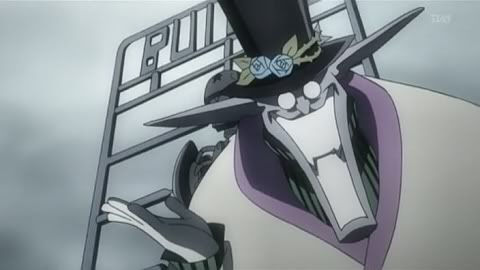
Fast-forward some unknown number of years into the future. A pretty bleak future, at that. The world has all but been completely destroyed, leaving humans, accompanied by robotic servants called AutoReivs, to live in domed cities protected from the harsh conditions of the outside world. This is the general setting of Ergo Proxy.

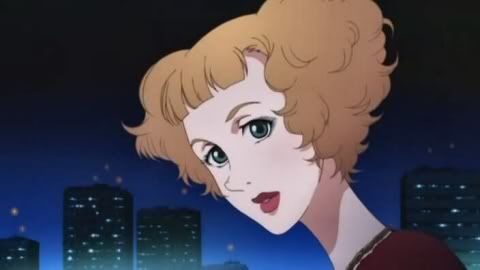
Re-l Mayer, daughter of Romdo City's Regent, Donov Mayer, is an inspector of the Citizen Intelligence Bureau, assigned with the task of investigating a series of murders committed by AutoReivs infected with what's known as the "Cogito virus." Re-l feels rather bored with her life, and the city, until one day when she encounters a strange monster running loose in the city, and discovers a top secret project being conducted by the government.

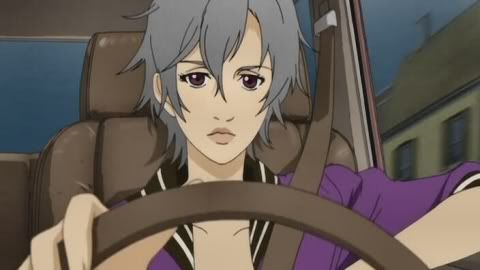
Vincent Law, an immigrant from Mosko, now living in Romdo, works for the AutoReiv Control Division, searching for infected AutoReivs and disposing of them. Vincent strongly desires to be a Model Citizen in Romdo, but fails to do so when he finds himself hunted by the Security Bureau, for reasons unknown to him. In a desperate attempt to escape, he leaves Romdo. However, in doing so, Vincent discovers the truth of his past, and becomes entangled in the mystery of the beings known as "Proxies."

Characters (click names for images)

Main Characters
  • Re-l Mayer: Re-l is an investigator of the Citizen Intelligence Bureau, as well as the daughter of the Regent of Romdo, Donov Mayer. Re-l becomes involved in the affairs of the beings known as Proxies after being assaulted by one and then searching for the truth that is concealed by the Romdo government. In her search, she finds herself following Vincent Law, who seems to be connected to the events somehow.

  • Vincent Law: Vincent is a submissive citizen of Romdo, originally from the Mosko Dome, giving him the label of an immigrant. In spite of the persecution he receives as an immigrant, Vincent strives to become a Model Citizen. He works for the AutoReiv Control Division, keeping a check on AutoReivs infected with the Cogito virus. His casual life is disturbed, however, when he finds himself being targeted by some strange monster, and then by the Citizen Security Bureau. With nowhere else to run, Vincent abandons his goal of becoming a Model Citizen and leaves Romdo in search of salvation.
Other Recurring Characters
  • Iggy: Iggy is Re-l's Entourage-type AutoReiv, designed to assist her with her job as a member of the Intelligence Bureau, protect her from harm, and also act as a companion.

  • Pino: Pino is a Companion-type AutoReiv, originally belonging to the family of Raul Creed. However, Pino becomes infected with the Cogito virus and leaves the Creeds' home on her own accord. In her travels through the city, she encounters Vincent, and decides to follow him from that point onward.

  • Raul Creed: Raul is the Director-General of the Citizen Security Bureau of Romdo. Raul reports directly to the Regent, and carries out his duties with much efficiency and loyalty. However, as he gradually discovers the truths hidden by the Romdo government, his loyalty begins to falter, as does his ego.

  • Kristeva: Kristeva is Raul Creed's Entourage-type AutoReiv, assisting him with his duties in the Security Bureau, including his reports to the Regent.

  • Daedalus Yumeno: Daedalus is given several roles. He is the Director of the Division of Health and Welfare, the Chief Physician of the Proxy Research Team, as well as Re-l's personal doctor. Although he is unaware of many details concerning the Proxies, he still knows much more than most others in the city, due to his role in the research of them.

Other Notes
  • References: The series is loaded with references to mythology, philosophy, and other subjects. There is a direct reference to French philosopher René Descartes' "Cogito ergo sum" ("I think, therefore I am"), and the Cogito virus is also a reference to this. Each episode being referred to as a "meditatio" (meditation) is also a reference to Descartes. The "Turing application," referred to in the first episode, is a reference to Alan Turing, a British mathematician/logician/cryptanalyst/computer scientist. Donov's and Daedalus' Entourages are named after philosophers. (Furthermore, the statues that represent Donov's Entourages are based on works of Michelangelo.) Daedalus and a later event involving him are references to the Greek myth of Daedalus.
    Of course, there are several others, as well.

  • Soundtrack: Divided into two discs (labeled as Opus 01 and Opus 02), the original soundtrack of Ergo Proxy mostly consists of dark, ambient music and electronica-/synth-based tracks. Given the setting of the show, this works very much in its favor, providing atmospheric background music throughout. Complimenting the cyberpunk theme of the series, the ending theme is Radiohead's "Paranoid Android."

  • English Dub: If you ask me, the English dub for Ergo Proxy is practically flawless when it comes to the delivery of dialogue. The show's got a great cast of voice actors and actresses, including Megan Hollingshead (credited as Karen Thompson) as Re-l Mayer, Liam O'Brien as Vincent Law (an actor and role I'm especially fond of), Patrick Seitz as Raul Creed, and Yuri Lowenthal as Daedalus Yumeno. Kudos to the casting director.

Conclusion

Ergo Proxy is a great series with overall excellent production, and a bit of a cinematic feel to it. The story is rather deep -- to the point that I'm sure I'm still missing out on significances to this day -- and only continues to get more intriguing as the series continues. (Though, admittedly, episodes 16 and 19 are exceptions, since not much of significance occurs in them.) The art style is generally quite pleasing to the eye, accompanied by some well-animated scenes and an appropriate soundtrack to fit the themes of the show. It all compounds to form a masterfully delivered story of mystery and suspense, plus a slight psychological touch. Spanning 23 episodes, a pretty standard duration, Ergo Proxy is something I'd highly recommend to just about anyone, as it offers a fair balance of action and drama, with a handful of interesting characters, and it's a reasonable length.

Monday, April 27, 2009

Haibane Renmei


Haibane Renmei (13 episodes, 2002)
(trans. Charcoal Feather Federation)


This is long overdue. I wanted to broaden the genre selection here first, though. Anyway, without further ado, I present to you my entry for Haibane Renmei.

Synopsis

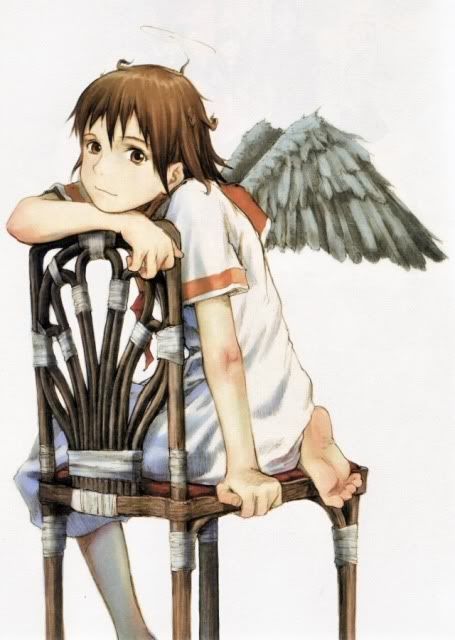
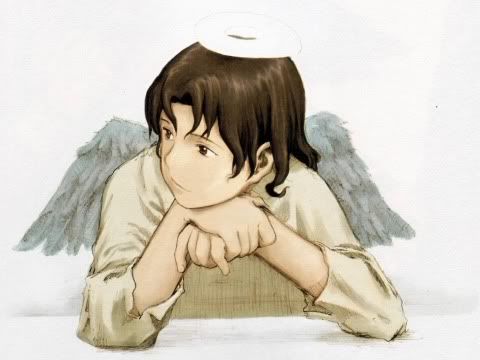
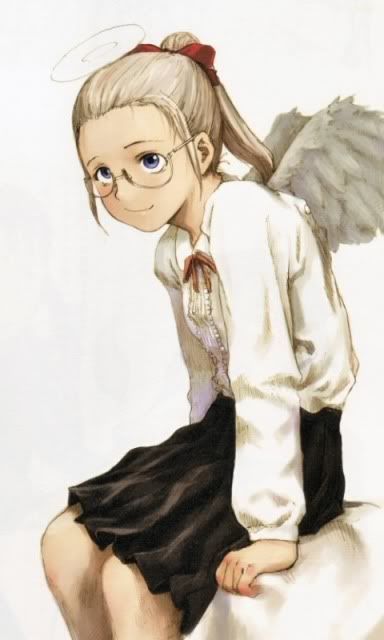
Haibane Renmei tells the story of a young girl who suddenly finds herself "born" into an unfamiliar world, in a town called Glie. Upon finding herself in a bed, surrounded by a handful of girls with small angelic-looking wings and halos, the girl finds herself unable to recall any memories of her past, including her own name. All she could remember was a dream she had before awaking, in which she was falling from the sky. The girls calmly explained to her that she was now a "Haibane" (trans. "charcoal feather"), as were they. Although they could not elaborate much more than that, they explained that they were all born into this world in a similar fashion: a cocoon forms, in which they dream before being born. None of them are able to recall their lives beforehand, nor their names, so they are named according to the dream they have inside the cocoon. Based on her dream, the other girls decided that her name would be "Rakka" (lit. "falling"). From this point on, Rakka would have to find her own place in this new world among the Haibane, as she discovers more about the Haibane and the world they live in.

Main Characters (click names for images)
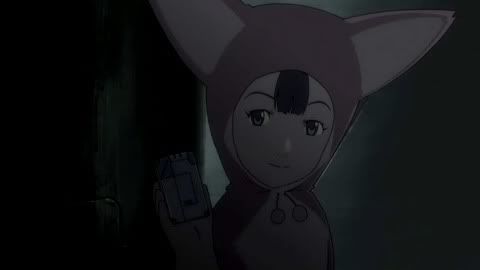
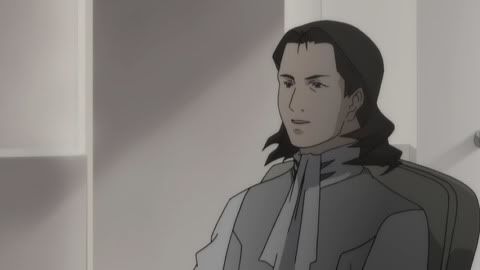
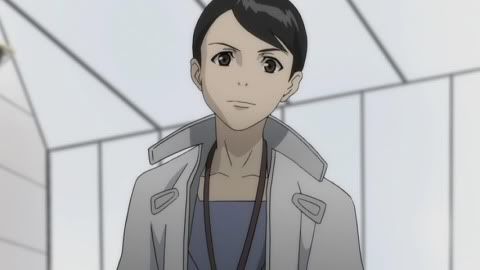
  • Rakka: Rakka's name means "falling," representing her cocoon dream of falling from the sky. Rakka is the main character of the story, and the newest Haibane at Old Home. Because of this, she is still very curious about the Haibane and the world they are born into.

  • Reki: Reki's name means "pebble" or "small stone." She can't remember her cocoon dream very clearly, but she recalls walking along a stone-laden path. Hence, the reason for her name. Reki is a motherly figure amongst the Haibane living at Old Home. She is the one who found Rakka's cocoon and took care of her once she was born.

  • : Kū's name means "air," representative of her cocoon dream of floating through the air. She is sometimes mistaken as a boy by some of the townsfolk, due to her boyish appearance and behavior. She is the youngest of the main characters at Old Home, but she always tries to act mature.

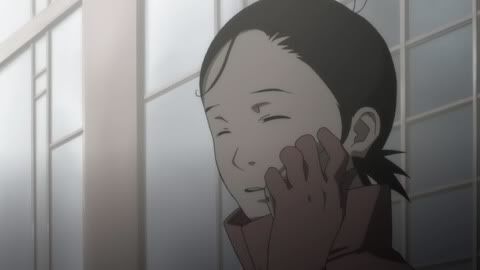
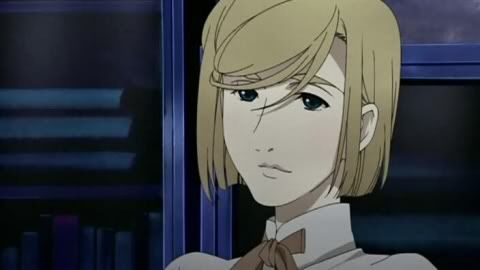
  • Nemu: Nemu's name means "sleep," and was chosen as her name because her cocoon dream was of herself sleeping. Nemu continually lives up to her name as a frequent napper. Among the main characters of Old Home, she has been a Haibane the longest (nine years), just ahead of Reki. She occasionally helps with the young Haibane at Old Home, but her primary occupation is as a librarian in town.

  • Kana: Kana's name means "river fish," based on her dream of drifting in a river like a fish. She's a bit tomboyish, often exuding a tough attitude. Coincidentally, she works at the clock tower at the center of the town, with a boss who's similarly stubborn and tough, yet caring. Thanks to this job, Kana has become handy with tools, and occasionally puts them to use to fix things around Old Home.

  • Hikari: Hikari's name means "light," in reference to the light that surrounded her in her dream in the cocoon. Although she tends to be on the more serious side, Hikari is also occasionally mischievous, such as the time she is caught using the Haibane Renmei's halo mold to make donuts at the bakery in town she works at.

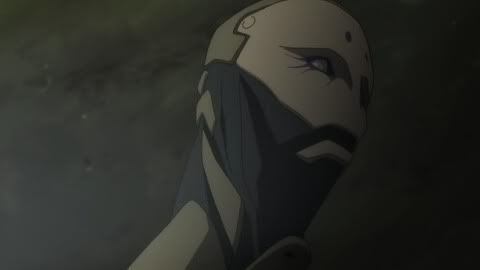
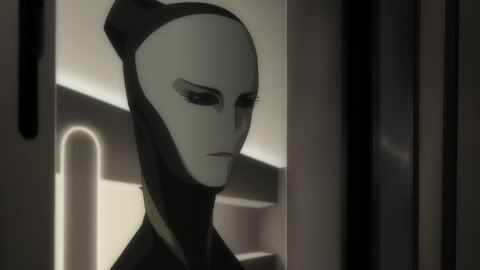
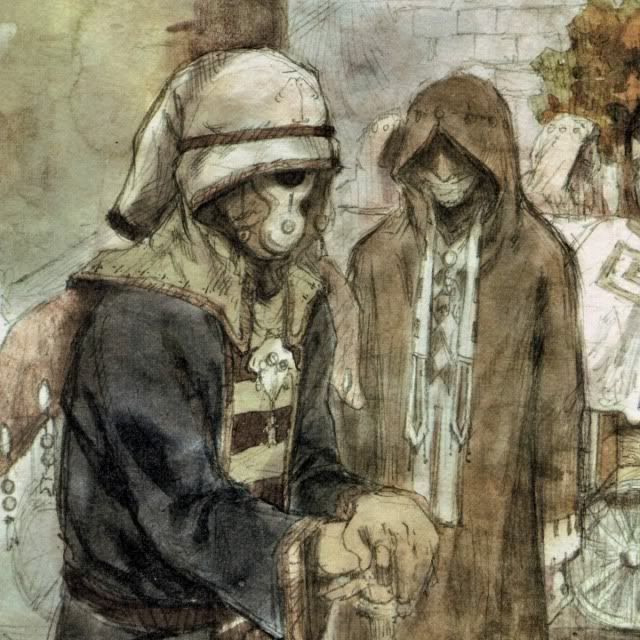
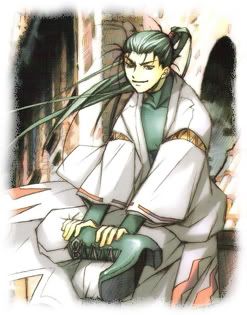
  • The Communicator & the Tōga (Image: Communicator on left, Tōga on right)
    • The Communicator: A masked Haibane who is an official of the Haibane Renmei. The Communicator gives advice and guidance to the Haibane, as well as punishment if needed. He is also the only person allowed to communicate with the foreigners called the "Tōga," and the only one who is capable of doing so, through the use of a sign language only understood by the Tōga and himself.

    • The Tōga: People from outside of Glie, the Tōga are the only ones permitted to enter and leave the town. Never speaking or revealing their faces, they bring goods to the town for trade. The negotiator for these trades is the Communicator.

Other Notes
  • ABe: By simply taking a look at the artwork, you may have already recognized the style of Yoshitoshi ABe. The series started as a dōjinshi titled The Haibane of Old Home, which was never completed, due to the conversion to an anime form. ABe is most recognized by his work on the anime series, Serial Experiments Lain, though he has also worked on NieA_7, Texhnolyze, the original novel of Welcome to the N.H.K., and other, non-anime works.
    In Haibane Renmei, ABe intentionally leaves a number of questions unanswered, leaving it up to the audience to analyze the story and use their imaginations to answer these questions for themselves.

  • Soundtrack: Haibane Renmei's original soundtrack is nothing short of amazing. Composed by Kō Ōtani, the soundtrack provides some great ear candy comparable to Celtic-style music, while also showing oriental influence in some tracks, as well as some light jazz. Ōtani provides an excellent variety of tunes for the viewers, truly bringing out the mood of each scene.

  • English Dub: Personally, I find the dub to be pretty decent. Nothing outstanding, but sufficient, if not a bit more than that. I can't say any of the characters' English voices particularly bother me, though there are the occasional moments when something sounds a bit unnatural. Overall, though, Carrie Savage (Rakka), Erika Lenhart (Reki), and the others all do a satisfactory job with their roles, and successfully (in my opinion) connect the viewer with the characters' feelings in the more emotional scenes.

Conclusion

Although it may be short and a tad inconclusive in some areas, Haibane Renmei is a really great series, and easily one of my all-time favorites. The general plot, accompanied by the soundtrack, is very laid back, yet dramatic when it's called for. The idea of the overall story and setting is fairly straightforward, but the openness that ABe gives for the viewers' ideas is a great touch, and many of the ideas I've heard of give some interesting explanations for those unanswered questions. If you're looking for something laid back, yet with an interesting plot, then this should be perfect for you.

Friday, April 24, 2009

To Aru Majutsu no Index


To Aru Majutsu no Index (24 episodes, 2008-2009)
(lit. A Certain Magical Index)


I've noticed not many people were particularly impressed by this, and just dropped it a few episodes in, but I found it pretty enjoyable. Admittedly, the story doesn't really go anywhere (yet?), but I found other qualities in the series to be rather appealing.

Synopsis

Although there isn't much of a story to speak of, the general plot of To Aru Majutsu no Index takes place in a Japanese city known as Academy City, a city of education and science. Among the students here, a handful are known as "espers" or "psychics," and possess supernatural/psychic powers, either from birth, or developed over time. Although they possess such powers, however, they are not to be confused with magicians, as magic is a different kind of power, which espers are not meant to use. (Furthermore, if an esper does use magic, their body is heavily injured in the process.)

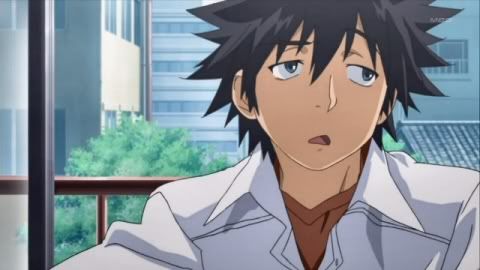
The main character of the series is Tōma Kamijō, a teenager with seemingly no supernatural powers to speak of, other than his apparent ability to run into misfortune around every turn. Tōma suddenly encounters a young girl, who goes by the name of Index, one day, and finds himself dragged into battles with magicians.

Characters (click names for images)

Main Characters
  • Tōma Kamijō: Tōma is a Level 0 who attends school in Academy City. However, despite being ranked as a Level 0, he does possess a unique power, enabling him to cancel, or at least dull, esper and magician techniques with his right hand. This ability is later referred to as "Imagine Breaker."

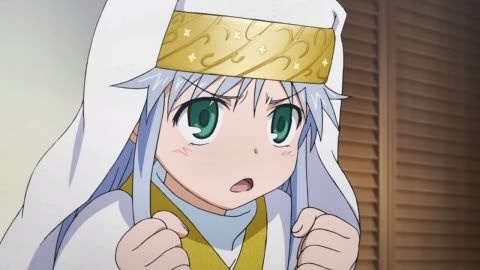
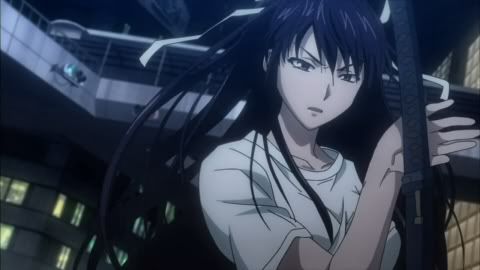
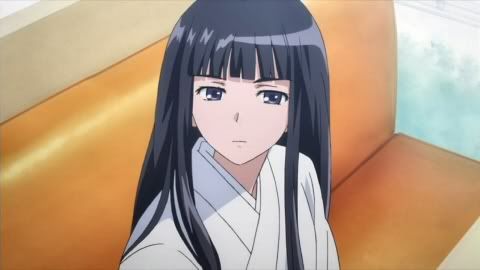
  • Index: Fully named Index Librorum Prohibitorum (sorcery name: Dedicatus545), Index is a young nun from Necessarius (the "Church of Necessary Evil"). The Church has the knowledge of the 103,000 grimoires of the Index-Librorum-Prohibitorum implanted into her mind. (Hence, her name.) However, the Church claims that, because of this, Index's personal memory must be wiped annually, so that her mind isn't overwhelmed by the memory of the grimoires on top of her own personal memories.

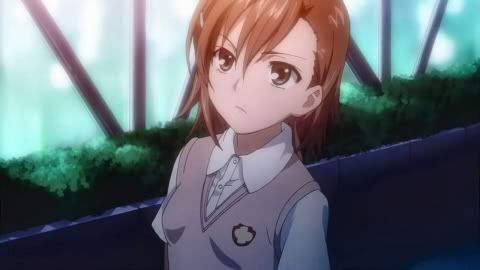
  • Mikoto Misaka: A student at the all-girls Tokiwadai Middle School in Academy City, Mikoto is a Level 5 esper -- the highest rank given to espers. Her psychic ability allows her to generate and manipulate electricity, which is powerful enough to cause power outages and create railguns using small metallic objects as projectiles.
    (Note: Mikoto is more of a major character in the side story of To Aru Majutsu no Index, called To Aru Kagaku no Railgun (A Certain Scientific Railgun), though she also appears as a main character in Index.)
Other Recurring Characters
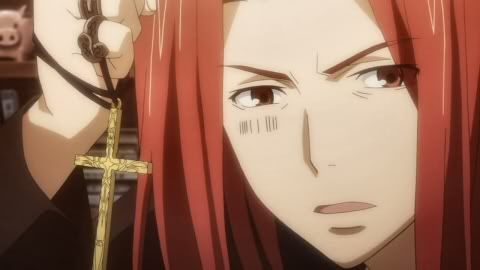
  • Stiyl Magnus: Stiyl (sorcery name: Fortis931) is a 14-year-old magician and member of Necessarius. His magical ability is the generation and manipulation of fire, including the summoning of a 3000-degree (Celsius) flame called "Innocentius" ("King of Witch Hunters").

  • Kaori Kanzaki: Kaori (sorcery name: Salvare000) is an 18-year-old magician and member of Necessarius, often paired with Stiyl. Kaori uses magic to strengthen her own body, and she uses a sword (specifically, a nodachi) named "Seven Heavens Seven Swords" as her weapon of choice. She also uses wires in combination with her sword for an attack called "Nanasen" ("Seven Flash").
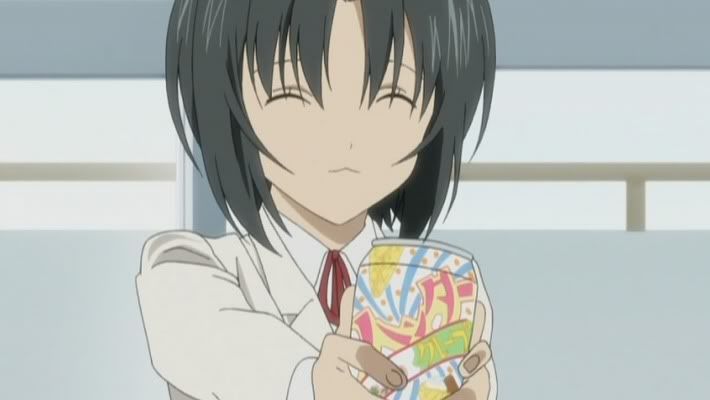
  • Aisa Himegami: Seemingly a normal young girl, Aisa is known as "Deep Blood," as she has the ability to lure and kill vampires, due to the nature of her blood. This makes her miserable, however, because she views vampires as being no different from normal humans, aside from the blood-sucking. In her search for a way to rid herself of this power, she moves to Academy City, where she meets an alchemist named Aureolus Izzard. Aureolus offers to remove her ability in return for aiding his research to save the life of someone dear to him.

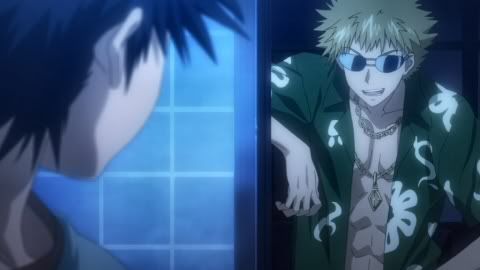
  • Motoharu Tsuchimikado: Motoharu is one of Tōma's school friends, as well as his next-door neighbor at the dorms. Although he seems to be a regular student at the school, he has a more complicated background involving Necessarius, which is briefly touched on later in the anime series. (It is further explained in the novelizations.)

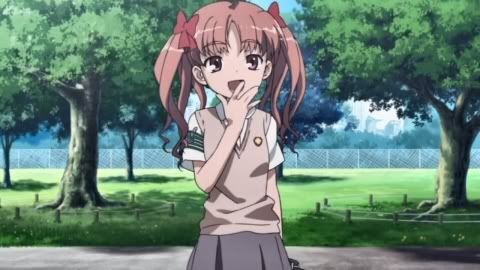
  • Kuroko Shirai: Kuroko is a student at Tokiwadai Middle School and Mikoto's roommate. She is a Level 4 esper with the power of teleportation, allowing herself and anything in her possession (as long as its weight is about 130-137 kilograms) to anywhere in a radius of about 81-85 meters. However, this ability requires her absolute concentration.

  • Komoe Tsukuyomi: Despite her childish appearance, she is actually an adult, and even one of Tōma's teachers. Contradictory to her actual age, however, she often acts childish as well, particularly to her students.

Other Notes
  • Soundtrack: Although this series' soundtrack didn't especially stand out to me, some tracks did catch my attention, because they just worked very well for the scenes they were used in. Appropriately titled Electromaster, the OST is mostly electronica-based, which actually fits the series pretty well, with all the magic and science present.

  • To Aru Majutsu no Index-tan: A series of shorts by this title was released as a DVD special for the anime series. Simply put, it's a parody. The shorts include references to other series as well as inside jokes, and are generally pretty humorous for whatever reasons.

Conclusion

Personally, I don't mind the episodic story/stories. Actually, there seems to be much more to the plot than the anime reveals, although I'm not sure how much more the light novel and manga adaptations may reveal. I'm hoping for a sequel, though I haven't heard anything about one at this moment. However, I have heard that the side story, To Aru Kagaku no Railgun, will be getting an anime adaptation at some point, so that should be a nice supplement.

Plot aside, I just find To Aru Majutsu no Index to be a neat series because of the whole science vs. magic theme, and it's got a decent amount of interesting characters, many with pretty nifty abilities. Academy City makes a pretty interesting setting for the story, as well, what with the schools working alongside the science behind espers.

If you're looking for a steady story to follow, then this may not be for you. However, if you're just looking for a series that puts some neat ideas to work, then I'd suggest giving To Aru Majutsu no Index a try sometime.

Wednesday, April 15, 2009

D.Gray-man


D.Gray-man (103 episodes, 2006-2008)


Synopsis

The general story of D.Gray-man revolves around a group of "Exorcists" known as "Black Order." These Exorcists fight against the evil forces of Akuma, led by the "Millenium Earl," a character told of in ancient prophecies, who will supposedly bring the world to ruin. It's up to the Exorcists to protect and utilize an existence referred to as "Innocence," which the Millenium Earl is determined to destroy. This Innocence is a mystery, even to the Order, but it is what grants them the power needed to extinguish the Akuma. Most important, however, is a specific Innocence, referred to as the "Heart of Innocence" (a.k.a. the "Great Heart"). Finding this Innocence ensures victory for the Black Order, but they have no way of locating it, other than gathering all the Innocence they can, before the Earl finds and destroys it.

A 15-year-old boy named Allen Walker is the main character of D.Gray-man. Allen was cursed by an Akuma at a young age, leaving a pentagle-shaped mark over his left eye. Because of this curse, Allen is able to see through disguises of Akuma, and is able to see the suffering of the souls used to create them. His left arm also possesses the power of Innocence, which leads him to join the Black Order as an official Exorcist.

As time progresses, Allen travels around the world with the Black Order, and he discovers many new threats and mysteries, including the group known as the Noah, evolved forms of the Akuma, further complications with the Innocence, and especially mysteries concerning his own past. As the struggle over the Innocence continues, Allen must not only aid his allies in the ongoing battle, but is also left with many personal questions of his past which he must find answers to.

Main Characters (click names for images)
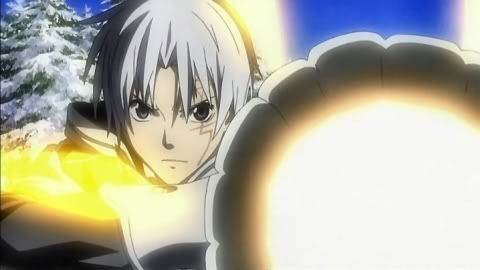
  • Allen Walker: Abandoned by his original parents, due the his "deformity," Allen was eventually adopted by a man named Mana Walker, who died three years later, leaving Allen alone. With a cursed left eye and an Innocence-possessing left arm, Allen continues to live on his own until he is recruited by the Black Order. Allen's Innocence is a parasitic type, and is originally unnamed. However, it is later referred to as "Crowned Clown." It first takes the form of a metallic claw-type weapon, but takes on various other forms and abilities as the series progresses.

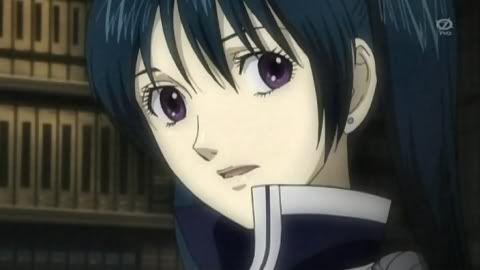
  • Lenalee Lee: Lenalee is the younger sister of the Supervisor of the Black Order, Komui Lee. Because of her ability to use Innocence, Lenalee was forced to become an Exorcist at a young age, and continues to live at the Black Order headquarters with her older brother. Lenalee's Innocence is an equipment-type called "Dark Boots," which allows her to move at high speeds, maneuver atop water, and travel through the air.

  • Lavi: Although he is also an Exorcist, Lavi's primarily training to become a "Bookman," a person who is meant to record major historic events and other significant information that is not openly available to the world. Lavi's Innocence is an equipment-type called "Tettsui" (Iron Hammer), and can not only increase/decrease its size on command (without Lavi feeling a difference in its weight), but is also capable of producing seals with various powers.

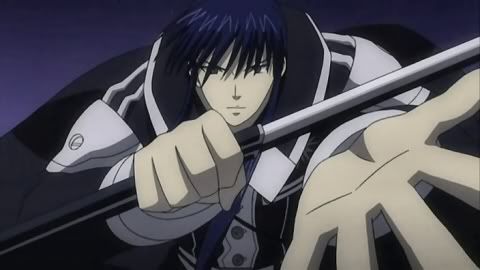
  • Yū Kanda: Yū is an ill-tempered young swordsman, who frequently gets into arguments with Allen. His Innocence is an equipment-type called "Mūgen" (Six Illusions), which not only can be used as a sword, but also possesses abilities referred to as "illusions."

  • The Millenium Earl: The Millenium Earl is the main antagonist. He is a sorcerer from ancient times, able to create demonic creatures called "Akuma" from the souls of the dead. Using the Akuma he creates, the Earl intends to rid the world of Innocence and plunge the world into oblivion.

Other Notes

  • Shortened Anime: The anime series spans a total length of 103 episodes, divided into two seasons (51 and 52 episodes, respectively), but the anime ends early, unfortunately. (I'm not 100% certain of the reasons behind this, but I assume the manga was lagging behind.) The manga is still ongoing, though, so if you watch the anime and are curious about where things go from there, then you should check out the manga. (I believe the anime ends around chapter 155-156 or so.)
  • Characters: I only listed four of the main protagonists and the main antagonist, but believe me when I say there are several others. Most of these characters have plenty appealing personalities and nifty Innocence abilities, too, so many of them should catch the viewers' interests.
  • English dub: From what I've heard of the dub, some of it is less than desired, but overall, I'd say it's okay. Todd Haberkorn does okay with Allen, and Luci Christian seems to do Lenalee's voice fairly well. Jason Liebrecht as Lavi does okay, though I think his voice is a bit too light (whispery at times), and his delivery of some lines is questionable. One of my greatest problems with the dub is this next character: Travis Willingham as Kanda. While Willingham is a pretty good voice actor (as far as I can tell, based on Roy Mustang in Fullmetal Alchemist), the voice he provides for Kanda is way too deep (comparable to many of Crispin Freeman's voices). They definitely could've done better with him. The last specific character I'll cover here is the Millenium Earl, who also happens to be voiced by Jason Liebrecht. Liebrecht's voice for the Earl sounds fitting, though it's a drastic change from the original Japanese voice. It could take some getting used to, but I think it seems fitting for him. I've actually noticed that many of the less significant characters' English voices seemed pretty well done, though there are a few poor choices scattered throughout the cast.
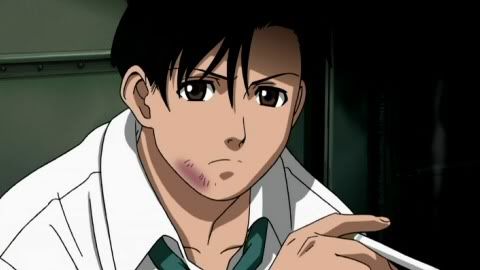
Conclusion

While D.Gray-man is a bit of a lengthy series, it's a pretty consistently great series, unlike some other long anime series. Personally, I think the series really piqued my interest the most starting around the time that the third opening theme was first used, and it continued to get even more interesting for the remainder of the anime. (Things have been getting really intriguing in the manga lately.) One of the many great things about D.Gray-man is that the heroes are very far from overly powerful. In fact, they lose their battles fairly often, and several characters even die in the series. Things start to look really grim for the protagonists, believe me. If you're sick of the good guys constantly overwhelming their enemies with ease in anime, then this series should definitely please you in that regard.

I honestly can't think of much to add on to my explanation of this series, but it's really great, so I'd definitely recommend it to anyone who is into this kind of stuff (Bleach and Naruto fans should enjoy it, but not exclusively them), and has the time to dedicate to these 103 episodes.

Friday, April 3, 2009

Red Garden


Red Garden (22 episodes, 2006-2007)
OVA: Dead Girls (45 minutes, 2007)


Red Garden seems to be a rather unknown series. It's a nice little hidden gem, though, and apparently managed to catch the attention of ADV Films for a localized DVD release (though it's now distributed by FUNimation), as well. Horror doesn't seem to be a very common anime theme, so it's nice to have this change of pace in Red Garden, and the series does a pretty great job of getting that feeling of terror from the main characters across to the viewer. (Though the horror aspect is somewhat limited to earlier episodes.) Even putting the horror genre aside, Red Garden is a pretty unique series, which I think deserves more attention than it gets. With that said, I hope my review/introduction thing here can get some of you interested.

Synopsis

The story of Red Garden follows four girls who find themselves suddenly unable to recall anything that occurred the day before. Unaware of the reason for this, the girls all go about their usual lives. Their school discovers some terrible news, however, reporting to the students that a fellow attendee of the school, Lise, was found dead that morning. Upon announcing this unfortunate discovery, the students are sent home early. Later that night, the four girls find themselves unexplainably drawn together, after following some butterflies that suddenly appear before them. A woman then appears, alongside a man, and tells the girls that they died. They died, and are now using "borrowed lives," as she puts it. The girls are then pitted against some beast-like man in an alleyway, where the woman and man disappear, leaving the girls to fight for their lives.

These fights continue, as ordered by the mysterious woman, who claims that the girls must fight these men if they wish to continue living. However, the girls do not blindly follow this woman, and find themselves surrounded by questions. Why can none of them remember what happened that night? Are they really dead? What are these people they are fighting, and why must they fight them? Who exactly are this woman and man? Will the girls ever be able to return to their regular lives? In order to obtain answers to these questions, however, the girls must continue fighting, and extract whatever information they can from this woman in the process.

Main Characters (click names for images)
  • Kate Ashley: Kate is a mild-mannered young girl, who is a member of the elite school group known as Grace, tasked with keeping the school's students in check with their attendance, dress code, and other matters. Perhaps the most open toward others, Kate tends to play the role of leader among the group of four, looking out for them, and trying to do what's best for the group.

  • Rachel Benning: Rachel is a bit of a fashion diva, or at least acts like one. She's always dressed in fancy, expensive clothes, and found hanging out with her friends at late-night parties. However, the news of the girls' deaths has the greatest impact on her, leaving her with the feeling that their current "lives" are pointless. Because of their complicated situation, Rachel's social life suffers immensely, giving her even more drama to worry about than her situation already does.

  • Claire Forrest: Claire is the rebel of the group, often skipping school or arriving late without a proper excuse. However, her tough attitude is required to get by in her life. Unlike the other girls, Claire lives independently, working a job that barely covers her rent. Claire is the most physically fit among the girls, and the least hesitant to fight when needed, but under her tough exterior, she is still a high school girl who is capable of the emotional suffering that the four girls all go through.

  • Rose Sheedy: Rose is a shy girl who lives alone with her younger brother and sister, taking care of them while their mother is in the hospital. Rose was accepted into the school on Roosevelt Island by winning a contest, and lives off of money sent by her father, who disappeared one day. Out of the group of four, Rose is the most caring, but the most sensitive and least willing to fight, usually cowering in a corner, crying, while the others fight for their lives. Rose acknowledges her weakness, however, and wishes strongly not to be a burden on the others, so she tries to do what she can to improve herself for this purpose.

  • Lise Harriette Meyer: Lise was the only connection the other four girls shared before her death. Seemingly easy to get along with just about anyone, Lise was friends with all four of the girls, despite their differences. The night that the girls all died, the car that was bringing Lise home was attacked, and she was taken away by the assailants. The next day, her body is found by the police, and her funeral was held shortly later.

Other Notes

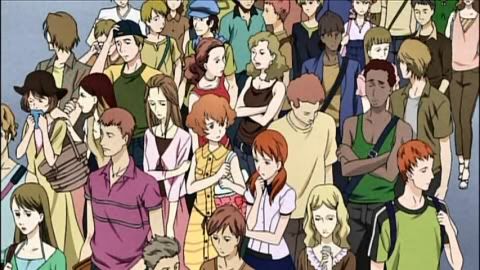
  • Art: For many people, the art style may be rather unique. Actually, to some, the character art may even be a bit unappealing. I think it's just a matter of taste... I suppose it could be described as a more realistic style, while still maintaining that anime feel. (Witch Hunter Robin's character art may be a good comparison.) The artists make a nifty move for characters' hair, applying gradients for their hair color, which seems pretty unique. Even more interesting is the clothes that characters wear. The main cast can be seen wearing several detailed outfits, and even in scenes with crowds of people, you may notice that practically every person on screen is wearing a completely unique outfit, which is something that is very rare to see in animated works. (Check: crowd screenshot.)

  • Environment & Culture: Red Garden has a (presumably) modern-day setting, taking place on Roosevelt Island and other areas of New York City. The creators really go out of their way to accurately portray many aspects of the city, which is a great touch. Even details as small as phone numbers listed on buildings factor into this. (I forget what episode, what building, et cetera, but there is actually a real, and accurate, phone number on the door of a restaurant in a particular scene.) Some of the characters even go to Coney Island and eat the famous Coney dogs at a Nathan's Famous hot dog stand/restaurant. Heck, there's even a random reference to Seinfeld's Soup Nazi, that comes up in a discussion between Kate and Rose.

    On the other hand, some inaccuracies in the series, as pointed out on Wikipedia, are: "There is no car/bus access between Roosevelt Island and Manhattan as shown in Red Garden. Nor are there any high schools, public or private, on the island. There is, however, subway access to the island and bus access from the Queens side, which are not shown." (Source)

  • Music: First of all, don't be misled by the opening theme for the show, "Jolly Jolly," by JiLL-Decoy. It's not particularly fitting. At all.
    While I can't really comment on the soundtrack otherwise (it hasn't particularly grabbed my attention), another music note I have to point out as being extremely awkward is that in a few particular scenes throughout the series, some of the characters will randomly break into song. As far as I can tell, it's meant as a sort of device for setting the mood, but much of the time, it's just plain strange. Thankfully, these scenes aren't too common outside of the first few episodes.

  • English Dub?: Unfortunately, I haven't seen Red Garden dubbed, so I can't really comment on the performance. However, from the little bit I heard in the English trailer, I wasn't impressed. The Japanese cast, on the other hand, generally does a great job, especially in the more emotional scenes. (This plays a major role in getting that feeling of terror across to the viewer in earlier episodes.)
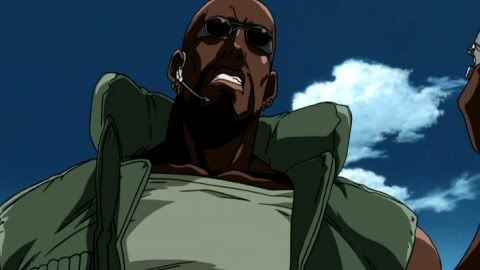
  • Dead Girls OVA: While I would like to cover this in the review simply because it's the sequel to the anime series, I'm choosing to omit it. I'm sure many other fans share the feeling of wishing to forget the OVA. While it's not terrible on its own, it abandons many of the things that made the original series great, and opts for some awkward futuristic setting, with the girls being almost completely different (mostly in bad ways), and the general plot is... kind of stupid, to be blunt. If you watch the entire anime series, but would like to see what happens after, then the OVA may or may not be worth looking into, but I'd personally suggest avoiding it. Main series: Good. OVA: Not so good.

Conclusion


Well, to be honest, I think my additional notes above sum up most of what I would've included in this conclusion footer. Aside from those notes, I'll just point out that I don't think it'll rank in the upper tier of anyone's favorite series, but I think it should still be a worthwhile watch, providing many unique features for the viewer to enjoy.

Tuesday, March 24, 2009

Casshern Sins


Casshern Sins (24 episodes, 2008-2009)


Casshern Sins is actually a sort of reboot of the 1970's classic animation, Neo-Human Casshern. (There was also an OVA, titled Casshan: Robot Hunter, or simply Casshern in Japanese, and a live-action film also titled Casshern.) All of these adaptations follow fairly different storylines, even with some recurring characters/names, though Sins is perhaps the most unique of them.

Synopsis

The setting of Casshern Sins is on a post-apocalyptic Earth, sometime after humans have been overthrown and removed from the planet by the robots that once served them. The main character and protagonist, Casshern, has no recollection of his past, and finds himself fending off robot assailants intent on his destruction. Through fighting, Casshern comes to the realization that he is immortal, for reasons unknown to him. It's not until one of his assailants, a girl named Lyuze, approaches him and informs him of the cause of the world's state of ruin, that Casshern gains the knowledge that he was that very cause, by killing someone called Luna. Lyuze decides not to kill Casshern until he acknowledges what he brought upon the world and accepts responsibility for it, but she keeps an eye on him from afar. Upon discovering this, Casshern sets off in search of the truth of his past, curious about this information Lyuze passed on to him.

Characters (click names for images)

Main Characters
  • Casshern: The main character of the series. Casshern is unsure if he is a human, a robot, or something else, but he seems to be immortal, recovering any wounds he recieves almost immediately. Finding himself constantly attacked by robots, and with a lack of control over his own body at times, Casshern is left with little choice but to destroy nearly everything he comes into contact with, whether he wishes to or not. This, however, is just one of the many mysteries which he is in search of explanations for.

  • Lyuze: A girl who blames Casshern for the deaths of Luna and her own sister, as well as the Ruin that has spanned across the world. Lyuze is determined to kill Casshern, as vengeance for her sister, but not until Casshern regains his memories and accepts responsibility.

  • Ringo: Ringo is a small girl who encounters Casshern while he is thinking about his disposition alone. Seemingly oblivious to the threat that Casshern's existence poses, Ringo befriends Casshern, and believes that he is a good person -- not the evil existence that most others believe him to be.
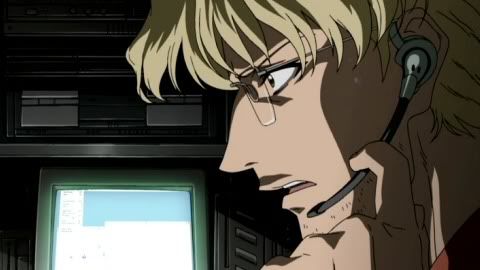
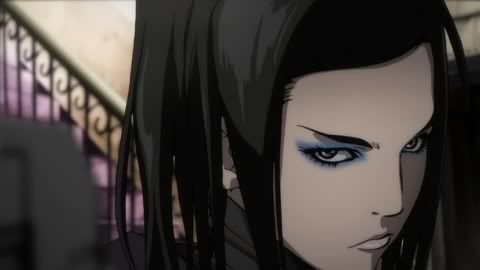
  • Ōji: Caretaker of the young girl, Ringo, not much else is known about Ōji. He is very cautious around Casshern, for he feels Casshern is a threat not only to his own life, but to Ringo, whom he cares for as if she was his daughter.

  • Friender: Friender is a companion robot in the form of a dog. Seemingly unphased by the Ruin, Friender is left in Casshern's care by his previous owners. After a turn of events, Friender decides to follow Casshern on his own, and seems to keep him in check when Casshern loses control of himself.
Other Recurring Characters
  • Luna: Known as "the sun called the moon," Luna is an important figure who was supposedly killed by Casshern, despite the rumors of her immortality. Her death is claimed to be the cause of the Ruin.

  • ???: A mysterious cloaked man who appears numerous times throughout the series,and seems to know a lot about Casshern.

  • Dio: A man who greatly resembles Casshern, Dio first appears before Casshern in episode 5. Whenever the two cross paths, Dio is hellbent on defeating Casshern.

  • Leda: First appearing in episode 6, Leda is a woman who appears to be similar to Casshern and Dio. Leda and Dio work together to raise an army of robots to destroy Casshern and take the position of the new rulers of the world.

  • Dune: Not seen until ten episodes into the series, Dune is the former bodyguard of Luna. Known as the "God of Death," Dune is a mighty warrior, but is left in despair when he fails to protect Luna. He wanders the world in search of Luna, as well as her killer, Casshern, to exact revenge on him.

Conclusion


Although I must warn that the story moves rather slowly, I've found it to be an enjoyable experience. One of the most interesting aspects of the show, I found, was watching as the robots, who previously had unending lives, gradually become more like the very humans they wiped from the face of the planet, now that they have limited lifespans thanks to the Ruin. Accompanying this theme is the theme of defining "life," whether it is better to have an endless -- and to some, meaningless -- life, or to have a limited life with which you are left to live to the fullest before it ends.

There are a handful of intense fight scenes (which are generally well animated), but the show's not exactly "action-packed." With the despair that the world is left in after the death of Luna, the series can actually be a bit sad, and even downright depressing at times. If you ask me, though, I think it's admirable that the creators managed to get that feeling across as well as they did. You really get to feel some sympathy for these characters, the majority of whom aren't even human. In the end, I think the series has a fair balance of action and drama, among other things.

If you don't mind a slowly progressing story, I'd recommend giving this series a chance. It's got some pretty slick (and fairly unique, in my opinion) art and animation, with an appropriate soundtrack accompanying it, and an interesting story and characters to tie it all together.

Saturday, March 21, 2009

Aria


ARIA (a.k.a. Aqua)
Season 1: Aria the Animation (13 episodes, 2005)
Season 2: Aria the Natural (26 episodes, 2006)
OVA: Aria the OVA ~Arietta~ (30 minutes, 2007)
Season 3: Aria the Origination (14 episodes, 2008)


To start things off, I'll say this: Aria is not for everyone. Being a "slice of life" series, it doesn't have the action or deep story of many series out there these days. Rather than that, the show follows a simple, calm story. It requires a particular kind of taste to enjoy. If you can get into it, though, I can almost guarantee that you won't regret it. Now, if you're still interested, do read on...

(Side-note: Just to clear up the "a.k.a. Aqua" note I made next to the title, the series was known as Aqua when it was being published by Enix in the Monthly Stencil magazine, but was renamed to Aria when it moved to Mag Garden's magazine.)

Synopsis

Aria takes place on a terraformed Mars, known then as Aqua. The series specifically takes place in the city of Neo-Venezia, a city modeled (as well as named) after Venice, a city of Italy on Earth (called Manhome in the series). The main attraction here is the gondolier service, which the main character, Akari Mizunashi, takes part in. Akari comes from Manhome, and aspires to become a great Undine. This said, the story follows Akari and her friends as they work toward their goals.

Main Characters (click names for images)

Aria Company
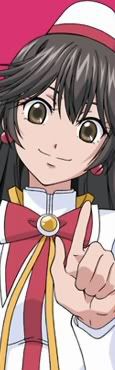
  • Akari Mizunashi: Main character of Aria. She's a very optimistic person, and a bit ditzy at times.

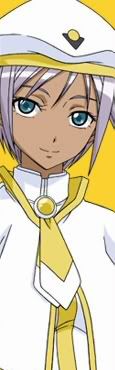
  • Alicia Florence: One the the three great "Water Fairies," and Prima-class Undine of Aria Company. Very popular; admired by pretty much everyone. Known by the nickname, "Snow White."

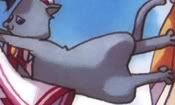
  • President Aria: Chubby mascot cat of Aria Company. Has a thing for President Hime. Hilarity ensues in most of his scenes.
Himeya Company
  • Aika S. Granzchesta: Close friend of Akari's, and heir to the Himeya Company from birth. Adores and idolizes Alicia of Aria Company.

  • Akira E. Ferrari: One of the three "Water Fairies" of Neo-Venezia, and Prima-class Undine of Himeya Company. A strict teacher to her juniors, but really a caring person behind her tough image. Known as the "Crimson Rose."

  • President Hime: Mascot cat of Himeya Company. Continually ignores President Aria's attempts to get her attention.
Orange Planet
  • Alice Carroll: Friend of Akari and Aika. Also junior to them in rank, but an able Undine nonetheless. Considered somewhat of a prodigal child in the Undine business. Seems a bit snobbish early on, but lightens up as time passes.

  • Athena Glory: Third "Water Fairy" of Neo-Venezia, and Prima of Orange Planet. Very clumsy, but very capable as an Undine. Known as "Siren," for her beautiful singing.

  • President Maa: Young mascot kitten. Chases President Aria and bites his flabby belly every chance she gets.
Others
  • Ai: Introduced in the first episode, Ai is a young girl who becomes close friends with Akari after riding in her gondola. Although Ai lives on Manhome, she keeps in touch with Akari through frequent e-mail messages.

  • Akatsuki Izumo: An apprentice "Salamander" (someone who helps to regulate Aqua's climate). Lives and works on the aerial island that hovers over Neo-Venezia, but occasionally takes trips to the surface. Claims to be madly in love with Alicia Florence.

  • Udo Ayanakohji the 51st: A "Sylph" (messenger/delivery man) occasionally seen throughout the series. Better known as "Woody."

  • Albert "Al" Pitt: A "Gnome" (someone who helps to regulate Aqua's gravity), working and living underground, only occasionally seen on the surface when shopping or on other special occasions. Al is rather short, but is actually older than Akari and Aika.

Other Notes

  • Soundtrack: Nothing short of amazing, the soundtracks to the series play a pretty major role in the enjoyment of the series. Composed by Choro Club feat. Senoo Takeshi, the soundtracks cover a nice range of soft jazz, piano, and even some Italian folk-esque pieces. Yui Makino does the opening themes for all three seasons, all of which are very soothing and give a great introduction to each episode. (By the way, opening themes play in the background while the episodes are introduced, rather than playing as separate parts of each episode.) The first two seasons' ending themes are done by Round Table feat. Nino, and the third is performed by Akino Arai. All three bring each episode to a very nice conclusion, just as effectively as the opening themes start things off. The soundtrack as a whole very much sets the mood for every occasion, and brings forth just the right amount of emotion. It really helps to make you feel included in the world of Aqua.

    Oh, right, there are also piano collections for the series, which are full of very relaxing tunes. There is also a vocal collection album, including vocals by the original voice actresses, among others. Another very nice addition to the soundtrack collection.
  • Cultural References: Not only is Neo-Venezia named after the real-life city of Venice, but everything about it takes after Venice and Italian culture in general, from the gondola services to annual festivals. Even the buildings are modeled after the architecture of Venice, and some of the buildings and other structures have even been carried and rebuilt directly from Manhome. Several other things take influence from the original city and culture (and language), which is a very nice feature of the series.

Conclusion


While this kind of series may not appeal to everyone, I very much hope that some of you are able to gain interest in it from the information I've provided (plus whatever else you might look up), and if you decide to check it out, I hope you are able to enjoy it as much as I have. It's a very nice series to just unwind and get lost in for a while, and with the characters, setting, and soundtrack, it's pretty easy to do so.

Introduction

Alrighty, I guess I'll give this blog thing a whirl, but differently from the crap I've got on LiveJournal (which I almost never update these days, anyway). For this, I'll be hopping on the bandwagon, making it an anime blog, of some sort or other. I figure since I watch so much anime these days, and generally like to share such things, an anime blog seems appropriate. Now, onto some details concerning the content:

First of all, I won't be doing reviews episode-by-episode, like some blogs out there. My updates will be concerning full series. (That said, updates won't be as frequent, but I'm generally looking into new series all the time, so I should be able to keep this updated fairly often.) ...I may or may not give some "first impressions" on newer series, though. We shall see.

Second, I won't really be giving the usual "reviews," per se. What I mean by that is I won't be giving numbered or lettered ratings for anything. It's just not really my thing. Rather, I'll be doing what I can to inform readers of what's good about a series, and, if I consider it worth bringing up, what is "bad" about a series. (That may sound a bit biased, and... I suppose it may very well be. What I mean, though, is that I tend to overlook minor flaws, myself, so I may fail to point out some in my posts.) From there, I leave it up to the readers to take all things into consideration, and decide for themselves whether or not a series seems worth checking out. (Of course, if a reader is already familiar with a series I post about, they are welcome to share thoughts as well.)

Third, I'll likely try to include a few extra features here other than just my blog posts. I can't say for certain, at the moment, what exactly I'll include, but if I think of something nice, I'll probably just put it up.

Finally, I want to apologize in advance for the fact that I have a rather limited vocabulary, and am not great with converting my thoughts into words. However, I'll try my best to keep things interesting and understandable.

With that said, I hope you enjoy this blog, and find it useful in discovering new anime series. If you have any general comments/questions/etc., feel free to either e-mail me or just leave a comment here in this introduction post.